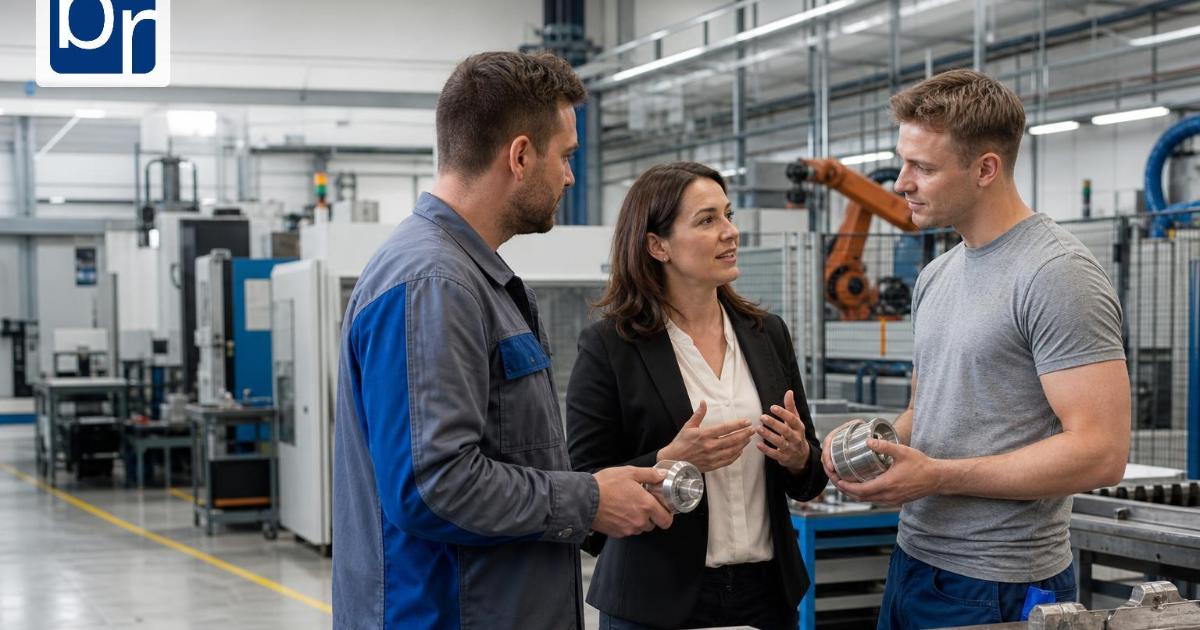
Germany's industrial base is undergoing one of the most profound transformations in its postwar history. Combustion-engine plants are converting to electric drivetrain production, steel mills are retrofitting for green hydrogen, and entire regional economies built around traditional manufacturing are being asked to reinvent themselves almost overnight. A recent IAB Forum analysis on regional employment policy confirms what many HR leaders already feel on the ground: structural change does not reduce the need for skilled labor — it multiplies it. New production lines, new machinery, and new technologies all require qualified hands, often faster than domestic labor markets can supply them. Balkan Recruiters works with employers across Germany, Austria, and Switzerland who are navigating exactly this challenge, helping them secure skilled workers from the Western Balkans while their industries undergo transformation. This article examines why securing skilled workers during structural change has become a board-level priority, where traditional hiring approaches fall short, and how a full-service recruitment partner can close the gap within weeks rather than years.
Why Structural Change Intensifies the Skills Shortage
Structural change is often discussed in terms of capital investment — new factories, new subsidies, new technology roadmaps. What gets less attention is the labor dimension. When a plant converts from combustion engines to battery systems, it does not simply need fewer workers; it needs different workers, often in larger numbers during the transition period, when old and new production lines run in parallel. Electrical engineers, battery technicians, automation specialists, and skilled machine operators are suddenly in short supply precisely in the regions where demand is highest.
This pattern mirrors findings covered in our analysis of labor demand beyond the service sector, which shows that production and skilled trades roles remain structurally understaffed even as digitalization accelerates. Regions undergoing industrial renewal frequently see vacancy rates rise faster than the national average, because local labor markets simply cannot produce enough qualified candidates on short notice. Vocational training pipelines take years to scale, apprenticeship enrollment has declined, and the domestic workforce is aging out of these roles faster than new entrants arrive.
The result is a widening gap between the pace of technological transformation and the pace at which companies can staff it. Employers who wait for domestic solutions to catch up risk missing production targets, delaying new product launches, and losing competitiveness to firms that secure talent proactively.
Why Traditional Recruitment Falls Short During Transformation
Conventional hiring channels — job boards, local agencies, internal HR teams — were designed for stable labor markets, not for periods of rapid industrial change. Several structural weaknesses become apparent when demand spikes:
- Speed: Domestic recruitment cycles often take months, while transformation timelines are measured in weeks.
- Volume: Retooling a plant may require dozens of qualified technicians simultaneously, far beyond what local applicant pools can supply.
- Quality control: Many companies report an influx of applications that do not match the technical profile required, a problem explored in our piece on unqualified job applicants in Germany.
- Integration capacity: Even when candidates are found abroad, companies often lack the infrastructure to manage visas, housing, and onboarding at scale.
These bottlenecks explain why Germany's labor market can shrink even during periods of economic growth, as documented in our article on how Germany's labor market shrinks despite economic growth. Structural change amplifies this contradiction: investment flows in, but the people needed to turn that investment into output are missing. Pre-screening and structured testing become essential rather than optional, since hiring the wrong technician for a new, unfamiliar production line is far costlier than hiring the wrong person for an established role.
How Balkan Recruiters Can Help You
Balkan Recruiters was built specifically to solve this kind of bottleneck. As a licensed placement agency (license UPI 03-30/12-125/26 EB) with a database of more than 68,000 candidates and partnerships with over 500 client companies, we specialize in sourcing skilled professionals from Bosnia and Herzegovina, Serbia, and the wider Western Balkans for electrotechnical, metalworking, automotive, logistics, construction, and IT roles — precisely the trades most affected by industrial restructuring.
Our seven-step process, detailed on our process page, typically delivers vetted, work-ready candidates within 10 to 12 weeks. This includes pre-selection, video interviews, and on-site casting events in Bosnia and Serbia, where employers personally observe candidates completing practical skills tests — not just reviewing CVs. This hands-on assessment model is especially valuable during structural change, when companies need confidence that a candidate can actually operate new machinery or follow updated safety protocols, not simply that they hold a relevant diploma. Our recent expansion of practical testing capacity, described in our update on the assessment center for automotive body repair testing, reflects this commitment to verified, demonstrable competence.
We also manage visas, documentation, and post-arrival integration, and all placed workers receive health insurance through our BARMER partnership. Because our fee structure is success-based, you pay only when a placement is successfully completed. Explore our full range of personnel placement services to see how this fits your specific transformation timeline.
Building a Resilient Workforce Strategy for the Next Industrial Cycle
Securing skilled workers during structural change is not a one-time fix — it is an ongoing strategic capability. Companies that treat international recruitment as a permanent pillar of workforce planning, rather than an emergency measure, are better positioned to absorb future disruptions, whether driven by automation, energy transition, or further market shifts. This means building relationships with recruitment partners before the crisis hits, not after production lines are already idle.
It also means rethinking how candidates are evaluated. As we argue in our article on hiring Balkan talent by competency, formal qualifications matter less than demonstrated ability to perform the actual tasks a transformed production line requires. Competency-based hiring, supported by practical casting events, allows companies to identify capable workers even when formal credentials do not perfectly match a newly created job description — a common scenario when entire roles are being invented as technology evolves.
Finally, integration planning deserves the same attention as recruitment itself. Lessons from government-backed programs, summarized in our review of integration of foreign skilled workers, show that companies investing in structured onboarding, language support, and housing assistance retain international hires far longer than those who treat arrival as the finish line. Our digital CRM platform helps employers track every stage of this journey, from first interview to long-term retention, giving HR teams visibility they typically lack when managing cross-border hiring manually.
Frequently Asked Questions
What does "Fachkräftesicherung" mean in the context of structural change?
It refers to the deliberate strategy of securing a stable supply of qualified workers while an industry or region undergoes technological or economic transformation. During structural change, companies often need new skill sets rapidly — such as battery technicians replacing combustion-engine specialists — making proactive workforce planning essential rather than optional.
Which industries in Germany, Austria, and Switzerland are most affected by structural change?
Automotive manufacturing, metalworking, electrotechnical engineering, and energy-related construction are currently experiencing the most intense transformation, as companies retool for electrification, automation, and decarbonization. Logistics and IT support functions tied to these sectors are also affected as supply chains reorganize.
How quickly can employers fill skills gaps caused by structural change?
With a full-service recruitment partner managing sourcing, testing, visas, and onboarding simultaneously, qualified candidates can typically be placed within 10 to 12 weeks — significantly faster than domestic-only recruitment timelines, which often stretch well beyond six months during periods of high demand.
Are candidates from the Western Balkans qualified for advanced manufacturing roles?
Yes. Many candidates in our database hold vocational training or hands-on industry experience in electrotechnical, metal, and automotive trades. Our casting events include practical skills testing, allowing employers to verify competence directly rather than relying solely on paper qualifications.
What does the recruitment process with Balkan Recruiters actually involve?
Our process includes pre-selection, video interviews, on-site casting events with practical testing in Bosnia and Serbia, visa and document handling, and post-arrival integration support. The full breakdown is available in our guide to recruitment process steps for hiring Western Balkan talent.
Conclusion
Structural change is not slowing down, and neither is the demand for skilled labor it creates. Companies that secure qualified workers proactively — before production lines stall or project timelines slip — will emerge from this transformation stronger than competitors who wait for domestic labor markets to catch up. Balkan Recruiters offers a proven, success-based pathway to vetted, practically-tested talent from the Western Balkans, backed by a 10-to-12-week process and full integration support.
If your company is navigating industrial transformation and needs qualified workers sooner rather than later, reach out through our contact form for a response within 24 hours, email us at info@balkanrecruiters.de, or call +49 (0)3222 999 0063. Let's build your workforce strategy for the next industrial cycle together.